The Nuggets of Information That Shouldn't Be Buried (Part 1)
We have overlooked a lot of very valuable information on the topic of metabolic health
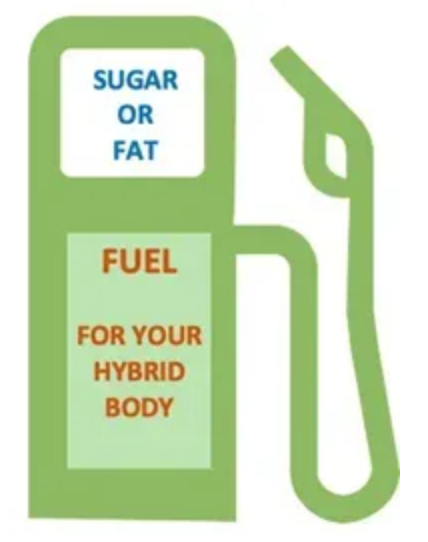
We Evolved To Run on Two Fuel Sources But Too Many of Us Run on Only One
This fact:
Is at the root of so much suffering
Speeds up our ageing and
Leaves us with poor prospects of a good old age
Fat or thin many of us in the west are in trouble. Our prospects for a physically and mentally agile old age are not good. We evolved to regularly burn fat to fuel our bodies. (1) Yet today in the West we mostly burn sugar for fuel, leaving us in energy overload.
Weight gain, inflammatory disease including heart disease and rapid ageing are driven by too much carbohydrate (not just of the table sugar variety). Healthy fats are not to blame, but even here there is confusion as to what healthy fats are; confusion that is potentially very dangerous. Too few people understand the dangers of the unstable polyunsaturated fats we are encouraged to consume in vegetable and seed oils. Too many still fear and associate saturated fat with heart disease. (Future articles will address the topic in more detail).
Nugget Number 2
Sugar is a “dirty” fuel that creates oxidation
Burning sugar for fuel too frequently reduces mental performance and
Leads to a faster mental and physical decline
Even if we have successfully cut sugar from our diet, we are eating too frequently and too many grain-based foods. The negative consequences of this are being dramatically overlooked but equally dramatically felt.
Nugget Number 3
Fat is in fact a “clean” fuel
When we burn fat we produce ketones
When glucose from carbohydrates is in short supply, the body will burn fat and produce ketones. The brain cannot burn fat so the body converts the fat to ketones that are then used as fuel by the brain. Ketones allow for more efficient on-going performance, cognition and neuroprotection. If ketones are present, the brain will spare the glucose and take up the ketones as the preferred fuel for the brain(2).
Nugget Number 4
When the body produces ketones it is in a state of ketosis
There are many benefits to ketosis
Being in a state of ketosis is healthy but not if the fats being used are primarily unstable poly-unsaturated, liquid oils.
To be in ketosis significantly fewer low fibre carbohydrates can be consumed such as bread, pasta and rice. High fibre carbohydrates such as vegetables can still be consumed. Ketones are produced from either burning body fat (if weight loss is desired) or healthy dietary fat.
Benefits of Ketosis:
- It can improve overall health
- Hunger is reduced
- Weight loss is often easier
- Reduction in inflammation, prevention and reversal of inflammatory diseases
- Type 2 diabetes can be reversed
- A powerful tool in preventing and fighting cancer
- Helps reduce anxiety and depression(3)
- May help to reduce migraines
- Epilepsy has been controlled by ketosis for many years, even without drugs
- Helps improve acne
- It can help improve menstrual problems
- It can help combat infertility
Nugget Number 5
The body shifts to burning mostly fat as liver glycogen runs low, which can take several hours or more after eating
(around 8-12 hours supply)
Our western diet, full of sugar and low fibre, grain-based foods, combined with eating too frequently is preventing us from burning fat for fuel for much of the time. Frequent consumption of carbohydrates resets the clock each time, meaning that the opportunity to start burning fat is further delayed. Depending on your health this can be anywhere between an hour to several hours.
Yet when we do manage to burn fat for fuel we are better set to benefit from:
- More energy
- Better mental clarity(4)
- A slowing down of the ageing process and an
- Immune system and inflammatory response that remains IN CONTROL.
Nugget Number 6
The new buzz word is “inflammageing”
Sugar burners lose control of their inflammation “off switch” (5)
Our immune system acts like the welcoming committee from hell (to borrow a rather graphic phrase from Cancer Research UK). Working to protect us from foreign invaders, be they toxins, viruses, bacteria, or the ravages of an unhealthy lifestyle. It sends white blood cells to attack invaders with brutal force. This powerful attack is known as an inflammatory response but needs to be over quickly in order to minimise damage to healthy tissue. The need to speedily shut down this process should not be underestimated.
Nugget Number 7
Inflammation is dragging many towards disease
The inability to switch off the inflammatory response is slowly dragging many, in varying degrees, towards disease, pain and mental decline. It is at the core of most of our western illnesses, including type 2 diabetes, heart disease, the different forms of arthritis, many allergies, asthma and cancer.
Regular sugar burners will also suffer:
- Brain fog
- Lethargy
- Weight issues
- Hormonal imbalances
Nugget Number 8
There are two ways of burning fat
Either through fasting
Or from consuming a higher fat, low carbohydrate diet
Burning Body Fat
Burning off stored sugar (glycogen) in the liver during fasting will enable you to tap into your stored body fat to produce ketones. This will enable successful weight loss.
Burning Dietary Fat
Consuming protein, moderate amounts of dietary fat and keeping carbohydrate consumption low (high fibre vegetables can still be consumed) will allow the body to burn fat consumed in the diet enabling the body to produce ketones. Weight loss can be prevented by increasing fat consumption.
Nugget Number 9
The understanding of cholesterol is being turned on its head.
A good cholesterol ratio can be achieved by increasing intake of saturated fat and reducing intake of low-fibre carbohydrates, especially sugar and grains
Consumption of healthy fats, including saturated fats allows for a more efficient flow of food energy. Low fibre carbohydrates, even in small, frequent quantities disrupt our hunger and fat storage hormones in a way that hinders the efficient flow of energy through our body. This can eventually lead to higher triglycerides (fat) in the blood.
Nugget Number 10
Our bodies should be metabolically flexible or ‘fat adapted’
So that we can easily switch between
Burning fat and burning glucose (sugar) for fuel
Are You ‘Fat Adapted?’
Many people are permanent sugar burners for whom running out of sugar fuel is too uncomfortable to ignore; compelling them to consume more sugar or carbohydrates.
Are you someone who feels you can’t skip breakfast?
This may be a clear sign you are not ‘fat adapted’.
A little knowledge of our master hormone insulin enables a clearer understanding of what we must do to regain or maintain health. My aim in future articles is to simply and clearly explain how insulin works in our body so that more people understand in order to make the right choices in what to eat and when to eat. You can also buy my book to learn more.
Marina Young, Hampshire, England
Poll
References
1.
Survival of the fattest: fat babies were the key to evolution of the large human brain. Comp Biochem Physiol A Mol Integr Physiol. 2003 Sep;136(1):17-26.Cunnane SC1, Crawford MA.
Can a Shift in Fuel Energetics Explain the Beneficial Cardiorenal Outcomes in the EMPA-REG OUTCOME Study? A Unifying Hypothesis Sunder Mudaliar, Sindura Alloju and Robert R. Henry
Diabetes Care 2016 Jun; dc160542. https://doi.org/10.2337/dc16-0542
What if It's All Been a Big Fat Lie? By Gary Taubes New York Times July 7, 2002
The big fat surprise: why butter, meat and cheese belong in a healthy diet
N Teicholz - 2014 - A New York Times bestseller Named one of The Economist's Books of the Year 2014 Named one of The Wall Street Journal's Top Ten Best Nonfiction Books of 2014 Kirkus
Reviews Best Nonfiction Books of 2014 Forbes's Most Memorable Healthcare Book of 2014
2.
Ketones Suppress Brain Glucose Consumption Part of the Advances in Experimental Medicine and Biology book series (AEMB, volume 645) Authors: Joseph C. LaManna, Nicolas Salem, Michelle Puchowicz, Bernadette Erokwu, Smruta Koppaka, Chris Flask, Zhenghong Lee
3.
Medium chain triglyceride diet reduces anxiety-like behaviors and enhances social competitiveness in rats https://doi.org/10.1016/j.neuropharm.2018.06.017Get rights and content
4.
Memory Enhancers E Halevas, GK Katsipis, AA Pantazaki - Biotechnological Applications 2019 – Springer
5.
Adipose tissue dysregulation and reduced insulin sensitivity in non-obese individuals with enlarged abdominal adipose cells. Hammarstedt A1, Graham TE, Kahn BB. Diabetol Metab Syndr. 2012 Sep 19;4(1):42. doi: 10.1186/1758-5996-4-42.